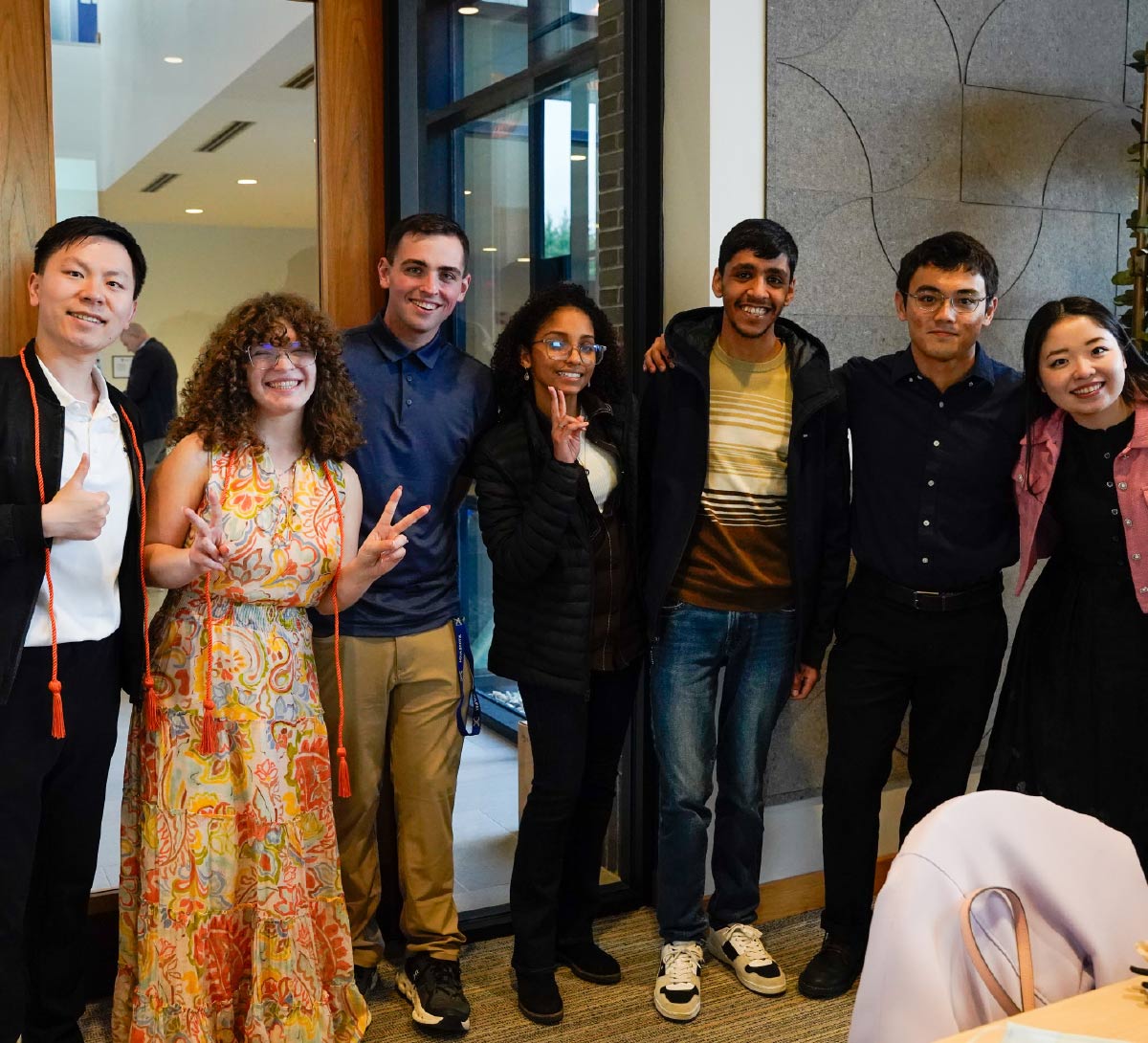

Celebrating 20 Years of the Chandler Center

ittle did Ryan Noronha ’17 know that a classroom discussion about service-learning during his sophomore year would change the trajectory of his life.
“There was a presentation on Inti, an afterschool program for children of all ages, primarily refugees and immigrants,” Noronha said. “The program included a lot of soccer, and I loved playing soccer growing up, so I thought that participating would be an awesome experience. It ultimately turned out to be the best decision I ever made.”


“Before The Chandler Center, I never knew how much I loved to give back to others,” he said. “I did a bit of community service in high school, but it was really to prop up my college résumé. Now I do it because I enjoy helping other people and working with vulnerable populations.”
These days, Noronha serves his community through his role as assistant administrator at Catholic Charities New Hampshire, a human services organization supporting those in need, of all backgrounds and beliefs, throughout New Hampshire. His efforts are focused primarily on the organization’s nursing home, ensuring that residents receive excellent long-term, short-term, and palliative care.
“I’m never going to work a job where I’m not making an impact on someone. It’s more than a paycheck for me,” he said. “I look to do something that, when I go home at night, I feel like I have that sense of purpose. I don’t believe that I would have found that had I not signed up to be a service-learner way back in the second semester of 2013.”
Noronha is just one of the more than 8,400 students who have engaged in community service since 2015, when participation data began being formally tracked. What was once a small, committed group of students raising funds for the March of Dimes has grown into a university-wide “community of caring,” logging more than 118,133 student service hours over the past 11 years.
While alumni like Noronha illustrate the personal impact of service-learning, a major turning point in the university’s broader community service efforts occurred in 2005 with the creation of a center focused on civic and community engagement to empower students to become active in their communities. This moved the university from random acts of kindness by students to a focused strategy of community engagement that integrates service with academic instruction and critical reflection.

Elizabeth Richards, assistant vice president of The Chandler Center, appreciates the magnitude of this culture shift and recognizes the positive impact of working with Laurie and Clarke Chandler to promote the work of the Center.
“Laurie and Clarke are part of The Chandler Center community,” she said. “The students know them and get excited to see them here. In addition to the financial gift, which is incredible, their friendship, mentorship, and connection to the work have really been the most valuable contributions to me. This has been a very special relationship.”
Service-learning has been an essential part of the campus community’s DNA since the university was founded as the New Hampshire Accounting and Secretarial School in 1932. In 2021, The Chandler Center broadened this tradition, significantly expanding its reach by engaging the online student population for the first time.
“It was wonderful to be able to start building communities within our online student space through SNHUconnect,” Richards said. “We now have ways for students, both on campus and online, to earn badges that show employers the skills that they’ve learned through being involved in community engagement. We’re continually growing, expanding, and improving.”


Similarly, the Student Support Foundation, part of a larger grant from the Morgridge Family Foundation, helps high school and college students learn about the role of philanthropy in effecting social change. Students identify a community problem, such as food insecurity or homelessness, and are provided seed money to develop strategies that create solutions.
Junior Mya Dowd is part of a new generation of service-learners at The Chandler Center. A justice studies major, Dowd is a Social Change Fellow and is performing research on civic engagement among SNHU students. She has been busy collecting data on issues like social advocacy and has made it her goal to pass on her research to decision-makers who can ensure that young people’s voices are heard.
“As a young person, it’s very difficult to navigate a political climate if you’re not already fluent in the things that are being said,” she said. “I believe that this project is important because I would love to shine a light on the resources that students have, to start asking questions and not be ashamed of being curious.”
The enduring legacy of The Chandler Center is its ability to create a culture of engagement, ensuring that students enter the world not only as professionals, but as empathetic, active citizens dedicated to lifting up the communities they call home.
“What The Chandler Center showed me was that I want to really be an active citizen and continue to volunteer in different communities throughout my life,” said Arielys Liriano ’21, associate project officer at the International Atomic Energy Agency in Vienna, Austria. “Even when I’m not in Manchester, New Hampshire, where I grew up, that idea of giving back is something that I still carry with me when I move abroad to different places.”